
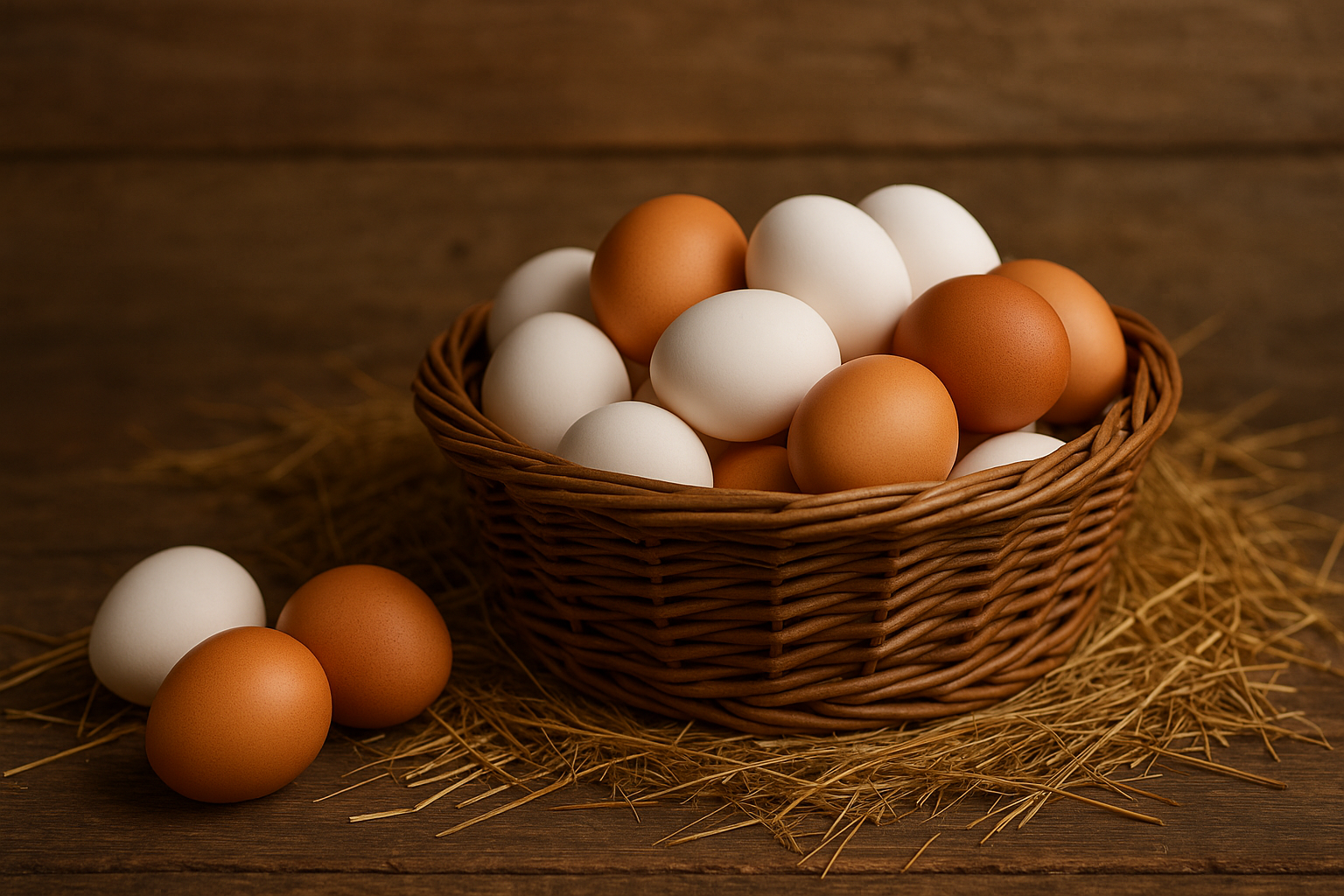
So what is the real difference?
1. The Difference Comes from the Hen
The colour of the eggshell depends on the breed of the hen, not on the egg quality.
| Hen Type | Egg Colour | Appearance |
|---|---|---|
| White feather hen with white earlobes | White Egg | Smooth, bright white shell |
| Brown feather hen with red earlobes | Brown Egg | Light brown to dark brown shell |
There is no difference in what is inside the egg because of shell colour.
2. Nutritional Value is Same
Both white eggs and brown eggs contain:
- High-quality protein
- Healthy fats
- Vitamin A, B-complex, D, and E
- Calcium, Iron, Phosphorus & Selenium
| Nutrition | White Egg | Brown Egg |
|---|---|---|
| Protein | ✔ Same | ✔ Same |
| Vitamins & Minerals | ✔ Same | ✔ Same |
| Taste | Slight difference due to freshness & feed | Slight difference due to freshness & feed |
So, nutritionally, both are equal.
3. Why Do Brown Eggs Taste "Better" Sometimes?
Taste mainly depends on:
- The feed given to the hen
- The health of the bird
- The freshness of the egg
Not the shell colour.
If a hen eats high-quality feed, the eggs taste better — whether white or brown.
This is where Mahendra Feeds plays a big role — we provide clean, balanced nutrition, which leads to:
- ✔ Better tasting eggs
- ✔ Healthy birds
- ✔ Stronger shells
4. Which Eggs Are Healthier?
Both are equally healthy.
5. So Which One Should You Buy?
Choose based on:
- Freshness
- Trusted source
- How the birds are raised
If you trust the farm and the feed quality, you're getting a good egg — no matter the colour.
Conclusion
White vs Brown does NOT matter. Quality of farming & feed matters.
Always choose eggs from a trusted poultry producer who maintains hygiene, proper nutrition, and healthy birds.
And that is where Mahendra Feeds focuses — from feed quality to farm output.